Monday, November 20, 2006

Hikone Castle and the Ii family's garden


Every couple weeks, the Cities and Civilization class ventures into different parts of Japan to explore areas that were important to or representative of the current era of study. Last weekend, we boarded the train to Hikone the location of the Ii family's castle, one of the oldest surviving castles in Japan.

Our professor (and tour guide) split us into two groups: attackers and defenders. Here he begins the lecture:


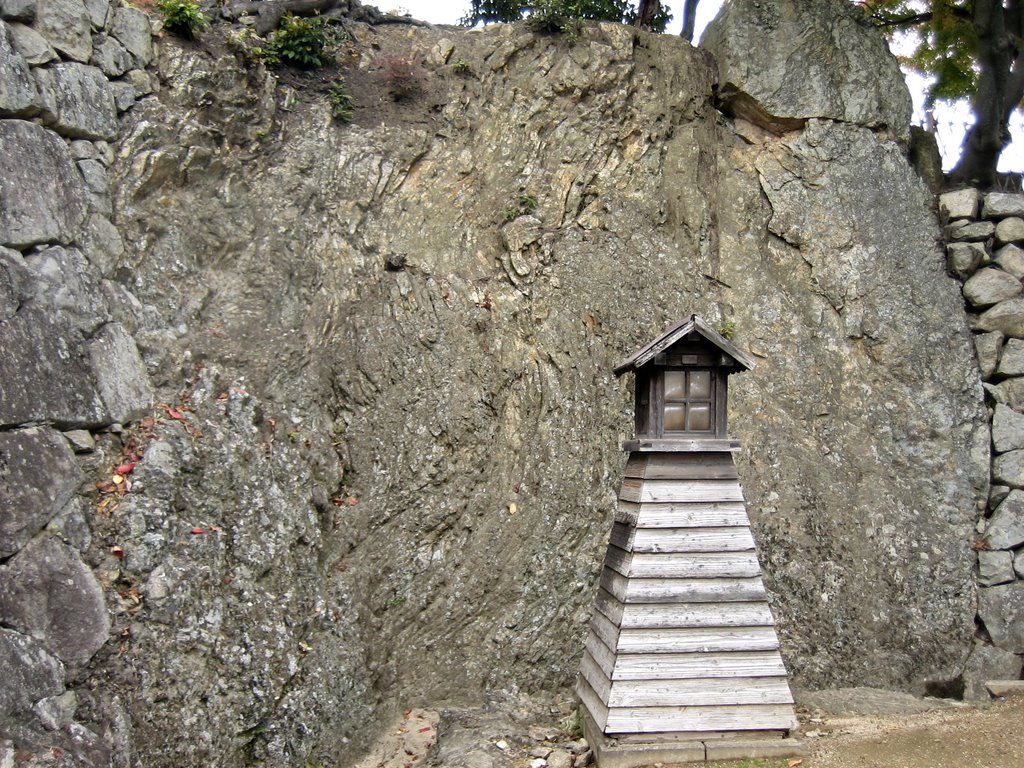
The texture warranted a picture:

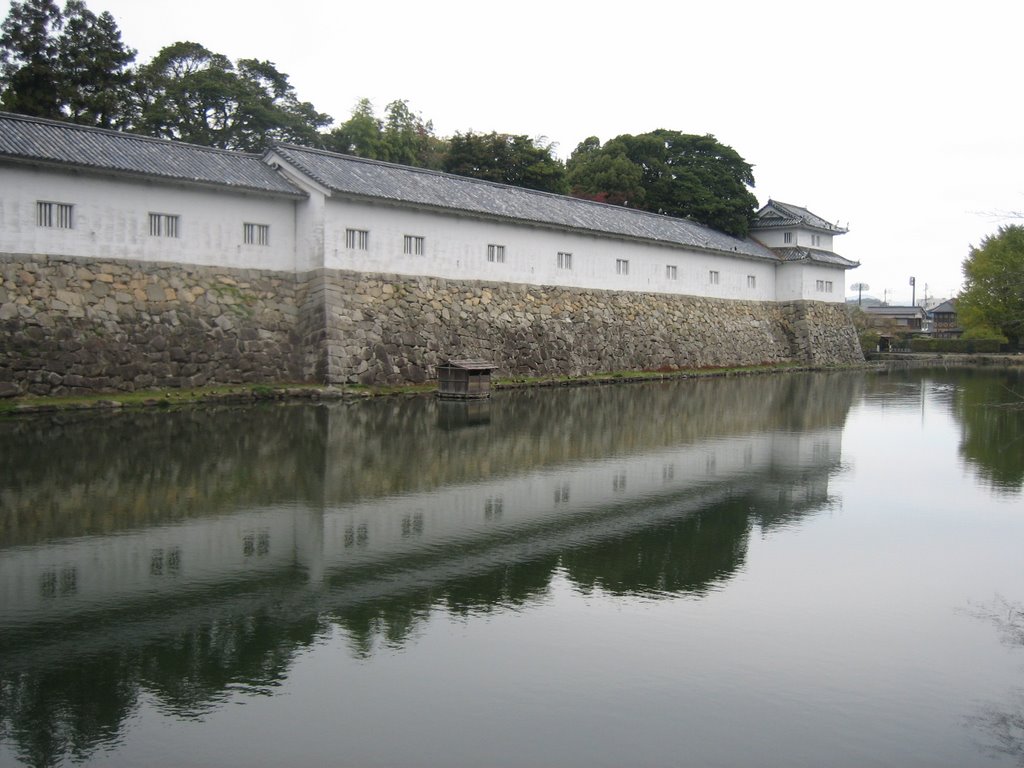
The castle:


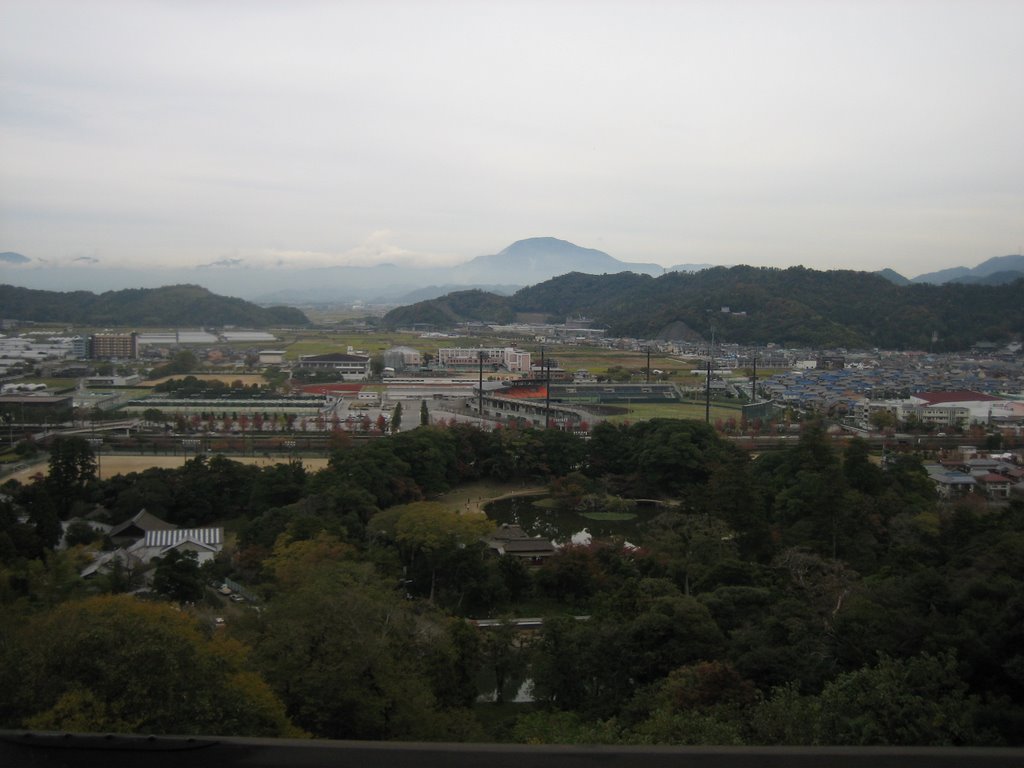
The view from the castle:

After being thoroughly routed by the attackers at the castle, we strolled down to the Genkyo-en garden, which was designed in the Chisen-kaiyu style, being centered around a pond, just beyond the inner moat.


Fall colors dotted the pathway around the pond:
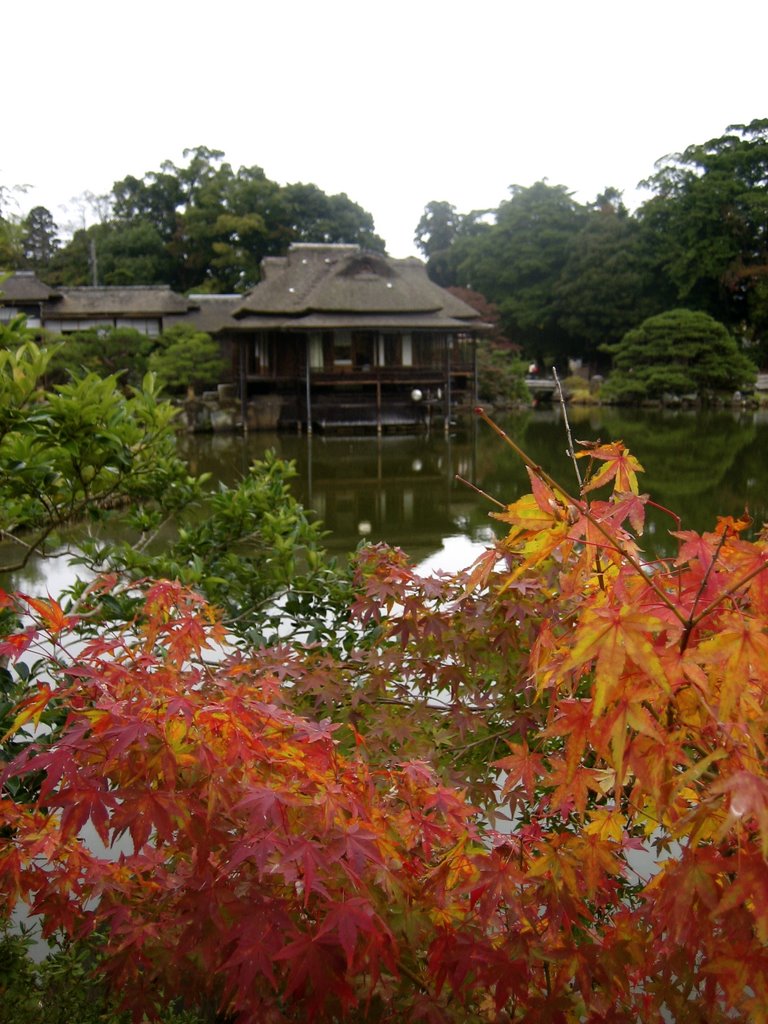


Walking through the garden:


In the "rakuraku" viewing house on the pond:
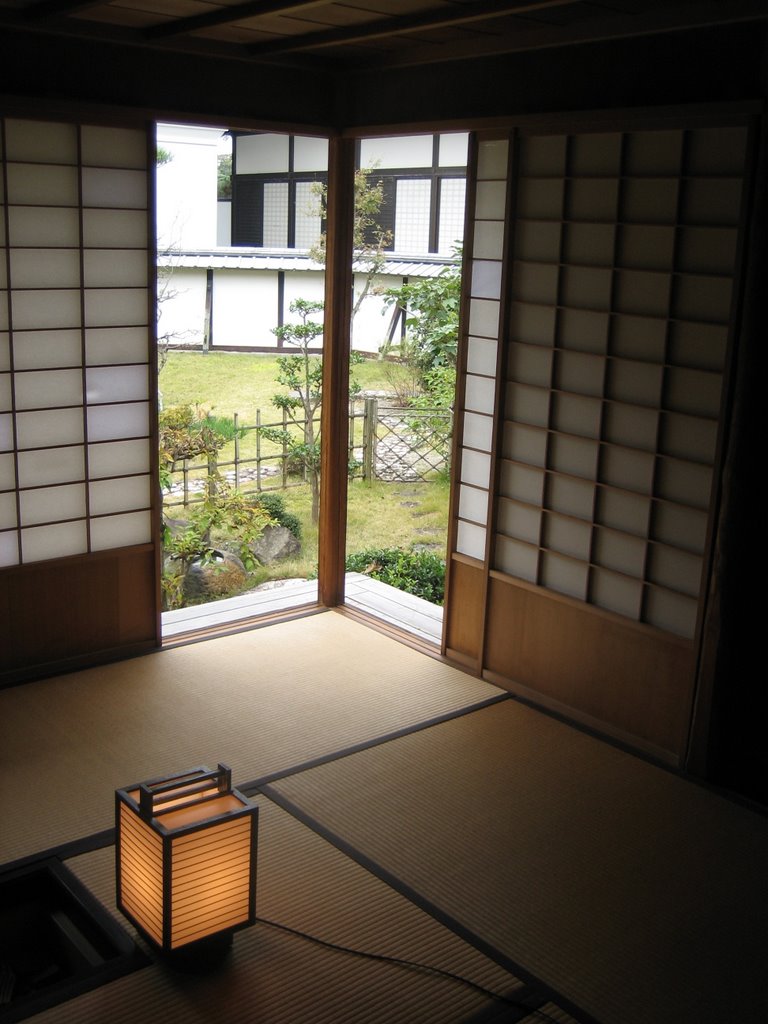

The water stopped in time:

Wednesday, November 08, 2006

Part of my translation of Zeami's "Toru"

月もはや  The moon quickly
出潮になりて rises the high tide and
塩竈の  the Salt Kiln’s
うら寂びわたる lonesome inlet
けしきかな is a desolate sight.

陸奥は In Michinoku,
いづくはあれど there are other such places,
塩竈の  where I watch Salt Kiln’s
うらみてわたる bitter bay.
老が身の  I grow old with despair but,
寄るべもいさや with no one to depend on,
定めなき  and without a fate,
心もすめる my heart can live and be cleansed
水の面に  in the surface of the water
照る月なみを the bright moon shines every month
数ふれば  I count the waves go by.
今宵ぞ秋の Tonight is indeed
最中なる  halfway through autumn
げにやうつせば and this reflected copy of
塩竈の  Salt Kiln, transferred here,
月もみやこの is mirrored in the moon’s center
最中かな lies the capital.

秋は半ば Autumn’s halfway point
身は既に  already arrives
老い重なりて showing signs of age,
諸白髪 my hair completely white,
雪とのみ  with the snow
積もりぞ来ぬる growing higher and higher
年月の  without fail, every year.
積もりぞ来ぬる growing higher and higher
年月の  without fail, every year
春を迎へ I welcome spring and
秋を添へ  autumn as I grow older
時雨るる松の the scattered rains
風までも  and pine tree winds pass
わが身の上と through my life
汲みて知る  comprehension surfaces,
潮馴れ衣 taming the ocean’s salty spray
袖寒き  as the cold seeps into my sleeves,
浦廻の秋の Passing through the bay
夕べかな  in the autumn night,
浦廻の秋の Passing through the bay
夕べかな in the autumn night.

Friday, November 03, 2006

Fall Break: The Clear Sound of Jewels

I just arrived back at in Kyoto after a week of break. It is a sunny Saturday afternoon and I don't know what I will write.

I boarded the ferry from Kobe to Takamatsu early Saturday morning. I didn't really know what to expect in Takamatsu, only that that was the closest "entrance" into Shikoku. I landed at 8 PMish roughly 5 kilometers from the center of Takamatsu, and without any choice, started the trek on foot. I luckily ran into a very friendly fellow, who suggested that I sit down and have a dinner of udon. Takamatsu's udon (and for that matter the whole northwestern part of Shikoku's udon), I was soon to realize, is supposedly the most delicious udon in Japan. But to my indifferent palate, it was merely as wonderufully delicious as the udon that I have been eating in Kyoto. Nonetheless, I soon located a ryokan and was fast asleep.
The next morning I wandered into the ruins of Tamamo castle, which lies right on the sea, with my duffel bag and an atlas of Japan.

Two older ladies approached me and explained that one of their friends hadn't showed up and that they had an extra ticket to an invitation only tea ceremony in the ruins of the castle. Jumping at the opportunity, I told them how I was studying in Kyoto and how this was my idea of a vacation. Luckily, they took to me quickly and soon we were sitting seiza in a room with a few tea masters and other older ladies. It was really a delight. After we sampled amazake, a wonderful osake based sweet drink. Interestingly, just outside the castle grounds, the Yakuza were staging a peaceful "rally", which we quickly avoided. I treated the ladies to a lunch of udon, and then found myself in the town of Kotohira.

Throughout the year, pilgrims from all over Japan trek (usually with the help of a bus) to the eighty-eight Shinto shrines that are spread around Shikoku, with perhaps the most famous stationed in Kotohira. After a nights stay in a riverside ryokan, and a climb halfway up the 1500-odd stairs, I met my two fellow (although usually separated) travellers, who had arrived late from Takamatsu. Countless toris and shrines lined the path to the top. Finally we reached the final shrine, which stood rather precariously on stilts which jutted from a rock face, surrounded by trees. We leisurely took lunch there where I unexpectedly, but excitedly, recieved a call from home. Happy Birthday Mom!


I next found myself in Katsurahama, where a famous statue of Sakamoto Ryoma, the local hero who played a role in instigating the Meiji Restoration, looks over the sea. I spent some hours reading and exploring the surrounding port. I met with my two friends who were travelling the same area, and we started heading west along the coast.


I stumbled across a run-down shrine tucked behind the port:


Next, we found ourselves in Ashizuri, which is the southernmost point in Shikoku. We luckily ran into a JET who was stationed in the nearby town of Tosa-Shimizu. She was nice enough to point us to the hostel which lies on the grounds of a Shinto shrine. As it was getting dark, we quickly made our way to the ocean shore and lighthouse. The tori (above) seemingly leads straight into the rock that juts out into the ocean, but if you shimmy up the rock face a small shrine comes into view. Unfortunately, I didn't bring my camera. But that rock face turns out to be the roof of one of the biggest ocean "caves" in Japan.


Sunday, October 15, 2006

A Weekend Away

I spent last weekend with the wonderful Yoshio family in Okayama prefecture. Their home, situated in a cleft between three hills, is an escapist's dream. Behind the main building lies the grandfather's grape vines, which I devoured over the the course of four days. Beautiful grapes the size and color of bleu de lyons ping pong balls that sparkle like diamonds. Or cobalt-colored slightly tarnished marble balls, the ones that you roll around your palm while complementing yourself on your own dexterity. And next to the grapes are the mother's edamame field and cabbage patch. I didn't know that the bean plants grow so thick and green. But sure enough, when I mentioned that edamame are very popular in America, she had me tearing up the plants and ripping the little pods from their stalks. Although I harbored a little guilt from ruining her beautiful garden, they still tasted delicious.


The first night, after being swiftly guided into the house and throwing hasty self-introductions to the elder members of the household, I was seated at the center of the dinner table. Thereupon, they attempted to drown me in sake. Although I was warned of this beforehand, I underestimated the ferocity. At one point, when I put my hand over my glass (as I had been recommended to do when not wanting to continue) the father just poured the sake through my hand. I hope you don't get the impression that they were forcing me to drink. Not at all. I'm told its the common (and surefire) way to break the ice in rural Japan. As a family, they couldn't have been more accomodating, understanding, or patient.


The next day, I followed the mother to the local elementary school to participate in Waku Waku Kagaku Rando, the "Exciting Science Land" in the gym. I had been conscripted as a staff member and delegated to the paper airplane and boomarang booth. At around 1:30, 50 or so elementary kids came bounding into the gym with eyes ablaze. With my inadequate supplies, I was quickly overrun by the continuing onslaught of the little balls of energy. My only choice was to appoint paper airplane deputies, and the system soon became stratified into separate classes. Now I'm getting carried away with the explanation. Anyways, it was great fun.


That night, a moon-viewing barbeque was staged at a family friend's house. Being the 16th of the 9th lunar month , the moon was at its height. We had chicken, snails, squid, sake, octopus, crab brains, grapes, shochu, rice, and pizza. Quite the feast.

Monday, October 02, 2006

Kawabata's Snow Country


I spent yesterday trying to get to as many festivals and markets as possible. My first stop was the antique market at To-ji, which was still beautiful despite the heavy rain (left). Rusty swords and coins, old robes and wooden cabinets, and the like were strewn under hastily built tents. Local Japanese and visitors from abroad jumped the puddles in unison like prancing deer.

Next, I rode the Kintetsu line to Momoyama, where I visited the Gokono-Miya Shinko-Sai at Gokono-Miya Shrine. Different food stands lined the path to the main hall where a shinto procession was just ending. I explored a little around the grounds. As I was exiting, an odango shop (one of my favorite sweets), just outside the entrance, surprised me. And I naturally had to taste one. Which became two. Who can resist when they are made right in front of you over a delicate fire?

But my favorite visit that day was to Kitano Temmangu. The rain was incredible. Plum droplets sounded on the leaves, and the white shinto prayers danced when the wind sang. What a wonderful place.

Monday, September 25, 2006

Kokoro


Yesterday I went to Arashiyama for the last day of the 2006 Kyoto Music Festival. The 20 minute tram ride from Shijo-Omiya took us straight to the western most subdivision of Kyoto. Praised for its accessible nature walks, its numerous Shinto and Buddhist shrines, and the beautiful Katsura river, Arashiyama was a wonderful surprise. Immediately after exiting the tram, my friend and I ran right into a Japanese a capella group performing their rendition of a "Rent" tune. Although captivating, we decided to side-step them and instead climb the steep slopes of, what is known as, Sarukouen, which means Monkey Park. Indeed, there are over 170 running, jumping, screaming, Japanese monkeys living in the park (above).

After spending some time with the monkeys, we climbed down, deciding to see the mainstage. There, next to the tacoyaki and ikayaki stand on the left bank of the Katsura river, we listened to a great jazz quartet from Nagoya perform different versions of anything from the Doors to Japanese folk songs. Then a church choir came on, and it got kind of wierd. We didn't feel like getting preached to, so we left in search of a famous bamboo forest off the river. As it became darker, we paid one last visit to the church choir, then left for the local station. The sun hid behind the green hills, and with the sound of the river water in our ears, we climbed back on the tram bound for the sweet streams of eastern Kyoto.